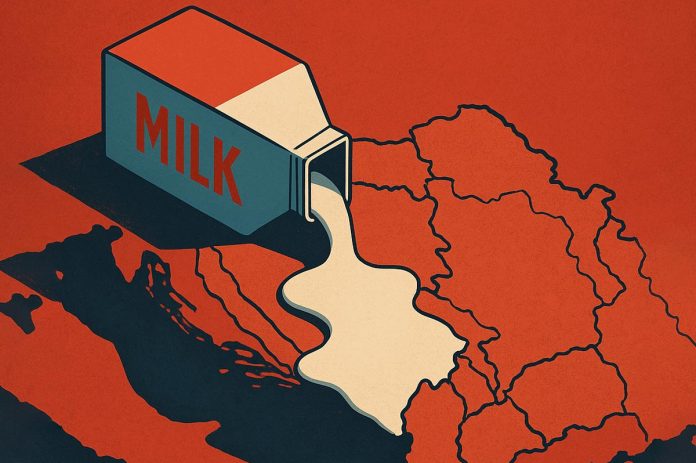



Ten Visionaries Born in Adria.
Their Work Now Touches Millions.
This Is Who’s Rewriting the Rules.
WHAT DEFINES A TRUE INNOVATOR IN 2025?
It’s not just capital raised, patents filed, or lines of code written. It’s the ability to scale ideas that change how we live. To shape new industries. To imagine futures where others see limits. True innovation moves beyond invention — it moves people, systems, and expectations.
From AI to gaming and Web3, they’ve reshaped how the world works and put Adria on the global innovation map.
That’s what these ten individuals are doing.
This is The Region’s curated Power List: ten visionaries whose roots trace back to the Adria region, and whose influence now extends far beyond its borders. They represent a new generation of builders — thinkers, engineers, entrepreneurs, scientists — reshaping the global tech and innovation landscape.
Some are still building here, anchoring their companies in Croatia, Serbia, or Slovenia. Others operate from San Francisco, New York, or Berlin.
But geography is not what binds them. Impact is.
Each has launched, led, or engineered something with real-world reach. Their innovations touch millions — from electric hypercars and gaming platforms to Web3 infrastructure, AI breakthroughs, and fintech transformations. They weren’t chosen because they’re famous. They weren’t nominated by brands. They made this list because their work moves the needle — for people, for industries, and for the reputation of the Adria region on the global stage.
In 2025, innovation is not only about what’s created — it’s about what changes.
THE QUIET SHIFT IS NOW LOUD
For decades, the Adria region was described with conditional language: emerging, promising, on the verge. A place of talent, but not yet scale. Of ideas, but lacking platforms.
Headlines focused on political turbulence or brain drain, often overlooking what was quietly building beneath the surface.

That’s over.
Now, something more powerful is happening — not coordinated, not official, but unmistakable: a generation is refusing to wait for permission.
These ten innovators show us that the story of the Adria region is no longer one of delayed potential. It’s a story of active transformation. At scale. At speed. And increasingly — on its own terms.
They don’t just represent where the region stands today — they hint at what it could become tomorrow: a place where invention doesn’t require translation, where relocation isn’t necessary for recognition, and where excellence isn’t the exception — but the expectation.
Their fields vary — from mobility to medicine, machine learning to social commerce. But what unites them is a deeper mindset: a refusal to be defined by limitation. Whether launching billiondollar platforms, pioneering AI ethics, building opensource tech, or creating tools used in daily life by millions, they are part of something larger.
They are changing the region’s posture — from hopeful to assertive. From local to global.
They are changing the region’s posture — from hopeful to assertive. From local to global.
Still, the work is far from done.
Talent still outpaces funding. Infrastructure still lags behind ambition. And many stories remain hidden beneath the surface — never pitched, never amplified, never told.
It’s whether the region believes it.
But these ten names offer something increasingly rare: clarity. They are not outliers — they are early signals of something broader. A shift not just in output, but in belief. Not just in how others see Adria — but in how the region sees itself.
This Power List is a recognition of achievement. But it is also a provocation — a reminder that the gap between what is and what could be is narrowing.
So the question now isn’t whether Adria is ready.
Where They Come From. Where They Build.
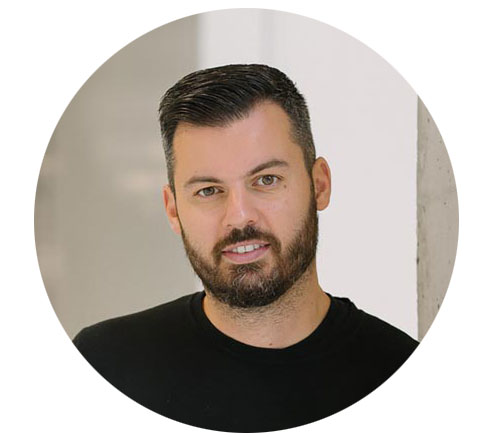
Mate Rimac
Founder & CEO, Rimac Group EV / Industrial Tech
Mate Rimac didn’t just build a car — he built a message.
That a young engineer from a small town near Zagreb could create the world’s fastest electric hypercar wasn’t just improbable. It was unthinkable. What started in a garage in Sveta Nedelja has become Rimac Group, one of Europe’s most admired industrial tech companies, with Porsche as a strategic investor, Bugatti as a joint venture, and a €200 million+ state-of-the-art campus underway near the Croatian capital.
Today, Rimac Group employs over 2,000 people and is quietly powering the future of electric performance for major global automakers, including Porsche, Hyundai, Aston Martin, and Koenigsegg. The company’s expertise in battery systems, electric drivetrains, and autonomous technology has positioned it as both a manufacturer and a critical supplier in the EV space.
”If someone had told me at the beginning what this journey would look like, I would have said it’s impossible”
Rimac’s story is often told as a startup legend — and it is. But it’s also a cultural one. He’s changed how Croatia sees itself and how others see the region. He’s made it clear that cutting- edge engineering, industrial ambition, and global leadership don’t require Silicon Valley or Berlin. They can come from Adria — and from someone who never left.

Mira Murati
Founder, Thinking Machines Lab / Former CTO, OpenAI Artificial Intelligence
Mira Murati helped shape the most talked-about technology of the decade — and she did it from the inside. As Chief Technology Officer at OpenAI, she oversaw the development of ChatGPT, DALL·E, Codex, and other tools that brought artificial intelligence into the everyday lives of millions. Her work didn’t just define the public phase of the AI era — it forced a global conversation about its risks, rewards, and ethics.
Born in Albania and educated in Canada and the U.S., Murati studied engineering at Dartmouth before working at Tesla, where she contributed to the Model X and early work on autopilot systems. Her approach combines deep technical understanding with a rare sensitivity to the societal consequences of innovation. At OpenAI, she advocated for responsible development, fairness in model training, and human-aligned outcomes.
The question is how do we align AI with human values. That’s not just a technical problem, it’s a societal one
In 2024, she launched Thinking Machines Lab, a research and product company focused on building the next generation of aligned AI systems — not only safer, but smarter by design. With a reported valuation nearing $9 billion, her new venture is already drawing attention from the world’s leading researchers, investors, and policymakers.
Through it all, Murati continues to speak about the importance of education, cultural context, and values-driven leadership. For many across the Adria region — and especially in Albania — she represents more than success. She represents what’s possible.

Branko Milutinović
Co-founder & former CEO, Nordeus Gaming / Interactive Media
Branko Milutinović proved that billion-dollar games can be built from Belgrade. In 2010, he co-founded Nordeus, the gaming studio behind Top Eleven — a football management game that would go on to reach over 240 million registered users worldwide. With José Mourinho as brand ambassador and a loyal global fanbase, Top Eleven became one of the most successful sports games ever built outside the traditional gaming capitals.
Under Milutinović’s leadership, Nordeus scaled with precision — bootstrapped from day one, profitable early, and fiercely independent. The company’s success didn’t go unnoticed: in 2021, it was acquired by Take-Two Interactive, one of the world’s top gaming publishers, in a deal estimated at over $350 million. It marked the largest gaming acquisition ever in Southeast Europe — and a defining moment for Serbia’s digital economy.
We proved you can build something global without leaving your city. That’s what Nordeus was always about.
Milutinović, who holds a background in electrical engineering and economics, was more than just a founder. He became a public advocate for Serbia’s tech ecosystem — supporting startups, investing in education, and helping turn Belgrade into a hub for creative tech talent. His story resonates across the region not only as a business case, but as a cultural shift. He made it normal to think big.
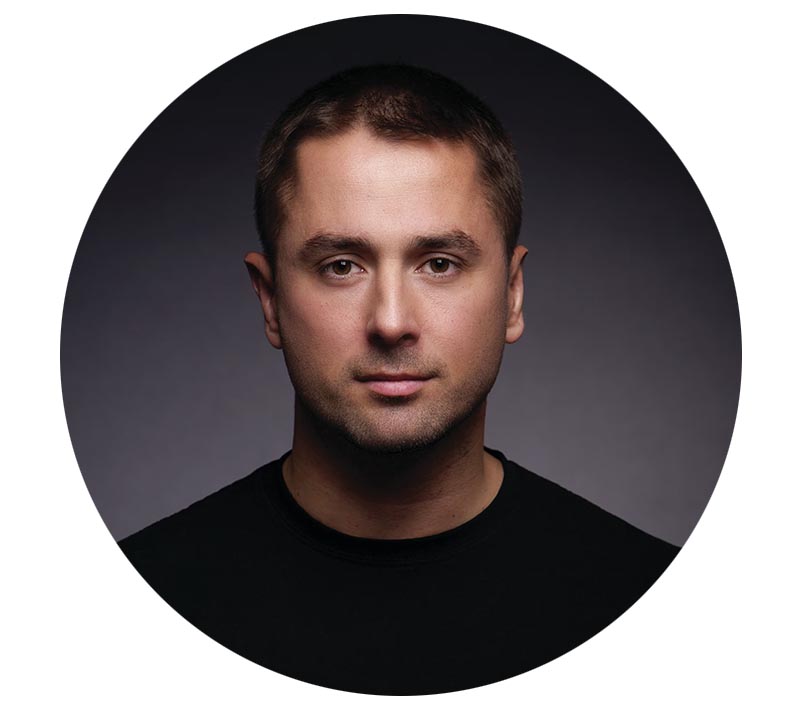
Nenad Milanović
Founder & CEO, CAKE.com / Productivity Tech
Nenad Milanović built one of the world’s most widely used productivity tools — from Novi Sad. In 2017, he launched Clockify, a simple time-tracking app that quickly became a global favourite among freelancers, startups, and corporations alike. Its appeal was radical in its clarity: fast, intuitive, affordable. What began as a niche tool turned into a category leader — with over 2 million active users worldwide.
Today, Clockify is part of CAKE.com, the broader SaaS suite Milanović leads. It now includes Pumble (team chat), Plaky (project management), and several new tools under development — all designed to help teams work better, wherever they are. CAKE.com is headquartered in California, but its DNA remains Serbian: the engineering team, leadership culture, and mindset are deeply rooted in Novi Sad.
From day one, our goal was to build global-first products. Clockify proved we didn’t need Silicon Valley to get there.
What sets Milanović apart isn’t just product vision — it’s his philosophy. He didn’t raise venture capital. He didn’t chase headlines. Instead, he focused on building quietly, shipping relentlessly, and letting the product speak for itself. That discipline — and that independence — have made him one of the most successful SaaS founders from Eastern Europe.
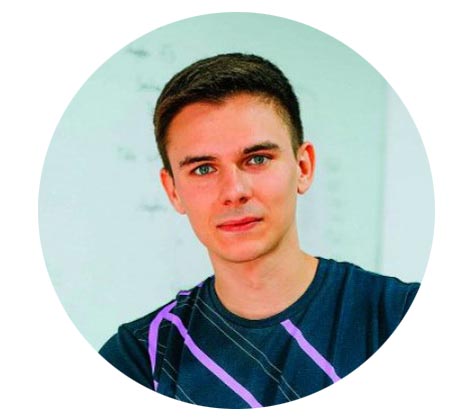
Andrej Benčić
Co-founder & CEO, Tenderly Web3 / Blockchain Dev Tools
While much of Web3 is noise, Andrej Bencic has been quietly building infrastructure that actually works. As co-founder and CEO of Tenderly, he leads one of the world’s most trusted platforms for developers working with smart contracts — the foundational code behind blockchain applications. Launched in Belgrade in 2018, Tenderly began as a monitoring tool and evolved into a full-stack developer platform for debugging, simulation, alerting, and automation across major blockchain networks.
With over $58 million in funding from global investors and integrations with Ethereum, Avalanche, Optimism, and others, Tenderly powers the behind-the-scenes operations of thousands of Web3 teams. Its clients range from small DeFi projects to major infrastructure players. What sets it apart is simplicity: Tenderly takes something complex and makes it feel seamless — a rare achievement in the blockchain world.
If you want developers to build the future of the web, you have to give them tools that feel like magic
Bencic, a developer by background, is also part of a growing group of founders proving that Belgrade can compete in deep tech. His team, headquartered in Serbia, collaborates with partners around the globe, delivering enterprise-grade performance from a region still often overlooked in the crypto economy. In an industry dominated by hype, Tenderly’s precision has made it indispensable.

Urška Sršen
Co-founder, Bellabeat Femtech / Wellness Tech
Before femtech was a category, Urška Sršen was already designing for it. A sculptor by training and a product designer by instinct, Sršen co-founded Bellabeat with a mission to create smart wellness devices tailored to women’s bodies, needs, and data. The company’s flagship products — Leaf, Ivy, and Spring — combine menstrual and cycle tracking, stress prediction, hydration reminders, and sleep monitoring in wearable form factors that feel more like jewellery than tech.
Launched between Ljubljana and San Francisco, Bellabeat was one of the first startups accepted into Y Combinator from the region. It has since shipped millions of devices globally and raised over $50 million in funding, earning recognition in both design and digital health circles. Sršen’s approach — blending algorithmic health insights with natural aesthetics — has helped redefine what smart health can look and feel like.
We believe that women deserve more — better data, better tools, better health outcomes. That’s why Bellabeat exists
More than a founder, she’s a voice in a space that too often ignored women’s data. Her work has been covered by Forbes, TechCrunch, and Fast Company — but she’s remained grounded in her roots. Whether from Slovenia or California, Sršen continues to build with the belief that technology should listen first — especially to women.
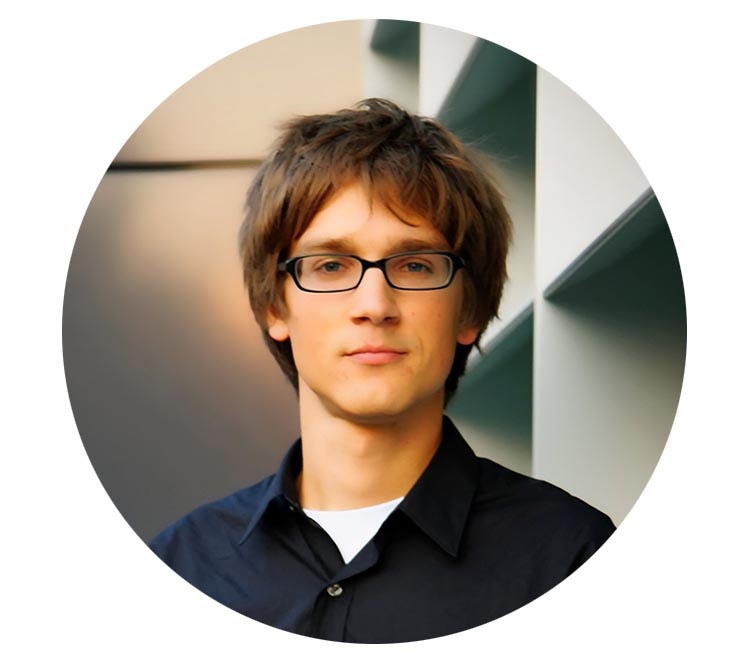
Jure Leskovec
Professor, Stanford University / Co-founder, Kosei AI / Machine Learning
Jure Leskovec is the kind of innovator whose work shapes the algorithms we live by.
A professor at Stanford University and one of the world’s leading minds in machine learning, Leskovec has spent the past two decades advancing how we understand — and model — human behavior through data. His research on graph neural networks, recommendation systems, and social dynamics has been cited tens of thousands of times, with applications powering everything from content feeds to fraud detection and public health analysis.
Born and raised in Slovenia, Leskovec earned his PhD at Carnegie Mellon before joining Stanford, where he now teaches and leads research at the Stanford AI Lab. In 2013, he co-founded Kosei, a machine learning startup focused on recommendation engines. The company was acquired by Pinterest in 2015, where he served as Chief Scientist — helping to shape one of the world’s most influential platforms from the inside.
Data isn’t neutral. The way we train systems defines the world they reflect
But his contributions go far beyond academia or corporate labs. Leskovec works on AI solutions for biomedical science, drug discovery, and mental health — pushing machine learning toward societal benefit. His global reach, grounded in a clear moral compass, is a rare combination. For many in the Adria region, he represents the quiet power of research done right.
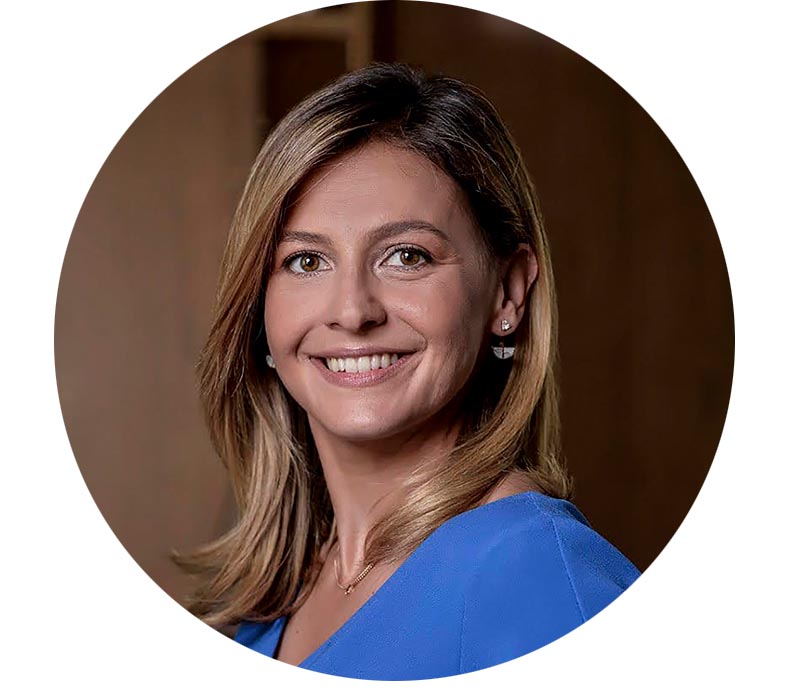
Nina Angelovska
Co-founder, Grouper.mk / Former Minister of Finance E-commerce / Digital Policy
At just 21, Nina Angelovska co-founded Grouper.mk, North Macedonia’s first major e-commerce platform — often called the “regional Groupon.” She didn’t just introduce online deals to a new market; she created a digital shopping culture in a country where it didn’t yet exist. Grouper became one of the region’s earliest digital success stories, setting the stage for the growth of online consumer behavior in Southeast Europe.
But Angelovska wasn’t done. In 2019, she became Minister of Finance, the youngest in the country’s history, and one of the youngest in Europe at the time. Her appointment marked a rare moment when tech talent crossed into public office. In that role, she pushed for digitalisation, transparency, and a more agile economic response — particularly during the COVID-19 crisis.
Today, Angelovska works globally. As a UN eTrade for Women Advocate, she promotes policies that help women entrepreneurs in emerging markets access digital tools and cross-border trade. She also serves on advisory panels across the EU and international organizations focused on e-commerce, digital economy, and entrepreneurship. Her ability to operate between sectors — and across borders — makes her a leading voice for what a connected, inclusive digital future might look like.

Josipa Majić
Co-founder, Revuto Fintech / Crypto Payments
Josipa Majić Has Built Her Career by Identifying Everyday frustrations — and then turning them into globally relevant products. She first gained attention with Teddy the Guardian, a smart plush toy that monitored children’s vital signs and became a symbol of how empathy could meet medical technology. The project, launched when she was still in her early 20s, won praise at health tech conferences and featured in media across Europe and the U.S.
But Majić wasn’t finished. Her next leap was into fintech, with the launch of Revuto, a blockchain- powered app that gives users control over their digital subscriptions — a problem millions face but few manage. Revuto lets users approve, pause, or block charges in real time, using both crypto and traditional payment rails. It raised over $10 million in its token sale, attracting hundreds of thousands of early users and positioning itself as one of the region’s fastest-scaling consumer crypto products.
Subscription management is broken. We’re giving people the power to decide, not just accept
Based in Croatia but thinking far beyond, Majić has become a rare kind of founder: one equally fluent in hardware, software, user psychology, and token economics. Her strength isn’t hype — it’s timing. Again and again, she arrives with a product just as users realize they need it.

Rajko Radovanović
Partner, Andreessen Horowitz (a16z) Venture Capital / Software Infrastructure
Rajko Radovanović is a partner at Andreessen Horowitz (a16z), one of the most influential venture capital firms in Silicon Valley. His focus lies in software infrastructure — investing in companies that build the core tools and platforms powering modern engineering teams. These range from advanced databases to developer-centric AI systems and next-generation backend services. His portfolio is defined not by hype, but by technical depth and long-term utility.
Though born in the United States in 1993, Rajko spent much of his early life in Serbia, moving there with his family in 2001 and completing his primary education. After returning to the U.S. for high school and university, he launched his professional career back in Serbia, a deliberate decision that reflects both his regional ties and his belief in global talent. He has lived and worked across borders, bringing a nuanced perspective to one of tech’s most competitive fields.
I grew up in Serbia. That perspective helps me spot the builders others overlook the ones solving real world pain
Radovanović began his career as an engineer, a background that gives him rare fluency in the systems he now helps fund. His transition into venture capital was driven by a desire to support ambitious builders — especially those operating just outside the spotlight. “I grew up in Serbia,” he says. “That perspective helps me spot the builders others overlook — the ones solving real-world pain.” Today, from his seat at a16z, he continues to back founders who are quietly building the future of software — one foundational layer at a time.