
Power, purpose, and the people shaping a region in transformation
There comes a point in every region’s story when the conversation shifts—from who we once were to who is shaping what comes next. The Adria region has reached that point. What was long described as “in transition” is now a theatre of decisions: where to build, whom to empower, what to protect, and how to lead. Across boardrooms and ministries, in family-owned empires and crossborder institutions, a generation of leaders is quietly rewriting the region’s narrative.
They share a few traits: discipline over drama, collaboration over competition, and an instinct for scale. They build wind farms instead of walls, factories instead of excuses, partnerships instead of monologues. Their work is turning Adria from a fragmented marketplace into a connected economic space.
These are the figures defining Adria now.
THE THREAD THAT CONNECTS THEM
These eight leaders don’t form a club. They differ in age, style, and sector. Yet their impact converges in one truth: Adria’s future will be written by those who combine competence with conviction. Some run factories, others ministries; some design code, others build consensus. Together, they’re transforming Adria from a story of transition into a story of traction—where leadership is no longer defined by geography, but by results.
The Inheritor Who Builds Forward
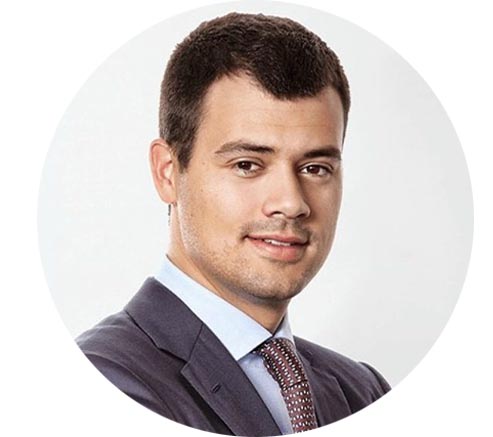
Aleksandar Kostić
President, MK Group | Serbia
Aleksandar Kostić stands at the crossroads of legacy and transformation. As second-generation leader of one of Southeast Europe’s largest conglomerates, he inherited more than a company; he inherited responsibility for shaping what modern regional capitalism looks like.
Under his direction, MK Group has repositioned itself from a domestic agribusiness and banking empire into a diversified investment group operating in energy, real estate, and sustainable tourism across the Adria region. Its renewable portfolio now includes large-scale wind and solar in Serbia and the neighbourhood, aligning with EU decarbonisation goals. In parallel, the Group’s tourism arm expanded through assets in Portorož, Kopaonik, and Budva, linking the Adriatic coast with the Pannonian plain.
Kostić’s public appearances are rare but deliberate. He speaks to signal intent—on energy transition, digitalisation of agribusiness, or sustainable finance. He belongs to the first Adria-born generation of leaders who didn’t just rebuild after transition—they’re now building forward.
The Constant in a Changing Decade
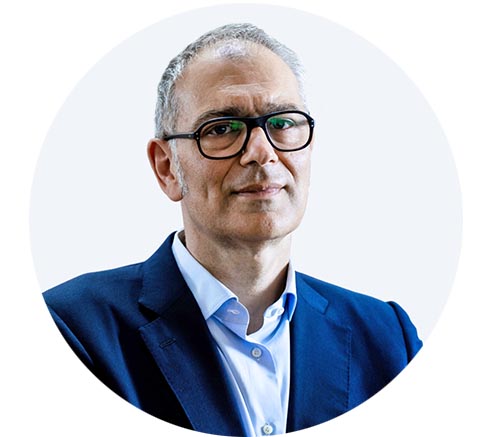
Emil Tedeschi
President & CEO, Atlantic Grupa | Croatia
Emil Tedeschi doesn’t chase trends; he outlasts them. Over two decades, he has turned Atlantic Grupa into one of the region’s most internationalised and professionally managed companies, active in 40+ markets with 5,000+ employees. Household brands – Barcaffè, Cedevita, Argeta, Cockta – anchor a portfolio built on governance and long-term discipline. The company reported €559.5m in H1 2025 sales and continues to refresh its organisation for the next phase.
A jazz drummer at heart, Tedeschi applies rhythm to management. He listens first, decides later, and never loses tempo. He invests in people, education, and the arts, believing that “you cannot run a sustainable business in an unsustainable society.” In a region still learning the rules of corporate maturity, Tedeschi has already written the manual.
Powering Europe’s Green Future from Subotica
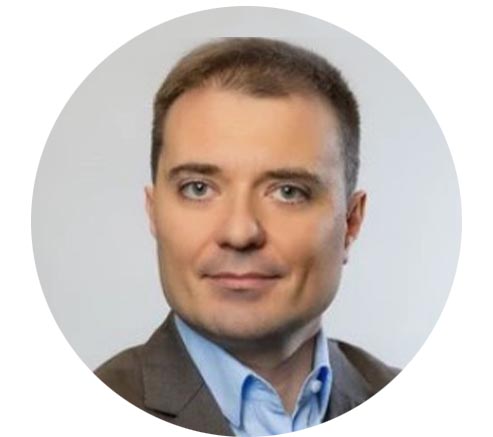
Nemanja Mikać
Founder & CEO, ElevenEs | Serbia
In an industrial zone near Serbia’s northern border, Nemanja Mikać is building the kind of capability Europe has been waiting for: batteries made in the EU’s neighbourhood, at scale. ElevenEs — spun out of Al Pack Group — opened an LFP (lithium-iron-phosphate) pilot cell line in Subotica in 2023 and is now scaling toward a mega-factory on the same site, while pursuing a new plant in Poland (announced September 2025).
ElevenEs designs prismatic LFP cells for electric vehicles, buses, and stationary energy storage – safer, longer-lasting, and fully recyclable. Backed by European industrial partners, the company’s roadmap puts Serbia on the map of the continent’s energy transition. Mikać’s leadership is grounded in scientific precision and industrial realism. “Our competitiveness,” he says, “comes from solving hard problems, not chasing subsidies.” In a region often dependent on imports, he’s exporting the future.
Capital with a Regional Passport
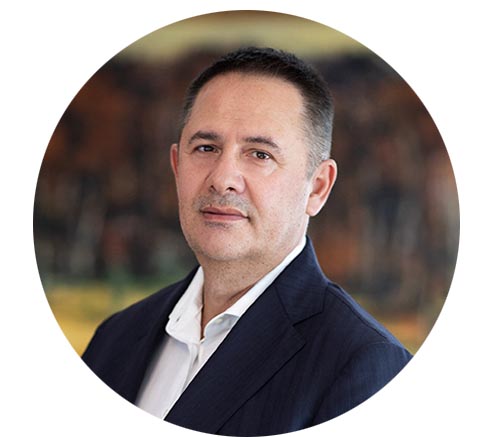
Samir Mane
Founder & President, BALFIN Group | Albania
When Samir Mane founded BALFIN in the mid-1990s, Albania’s private sector barely existed. Today, he presides over one of Southeast Europe’s largest and most diversified groups, with interests in energy, construction, banking, logistics, retail, and tourism across the Western Balkans. In July 2025, BALFIN opened the Green Coast Hotel – MGallery Collection on the Ionian Riviera—a symbol of how domestic capital is remaking the region’s tourism and real-estate landscape.
What sets Mane apart is his scale of vision. He sees Adria as a single economic corridor and invests accordingly. His entry into select global rich lists was symbolic—a recognition that private enterprise from the Western Balkans can compete globally. At home, he champions youth entrepreneurship and education reform, arguing that “human capital is the only lasting capital.”
The Strategist of Digital Transformation
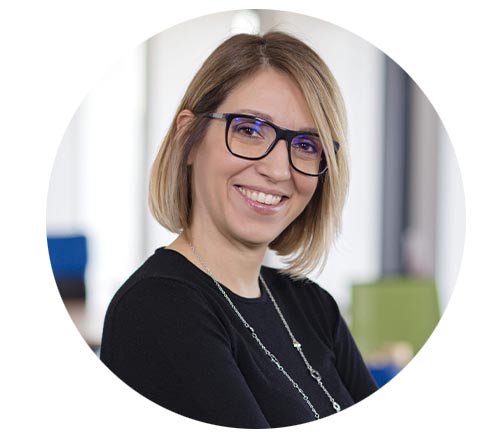
Nataša Sekulić
IBM Consulting, CEE Leadership | Former IBM Country Leader (Serbia/region)
Nataša Sekulić’s office might be in Belgrade, but her impact spans the corridor from Warsaw to Vienna. A senior IBM executive for Central & Eastern Europe, she leads complex digital-transformation programmes across banking, government, energy, and telecoms—turning sprawling IT estates into coherent, data-driven platforms.
Her expertise is translating complexity into execution: cloud modernisation, data governance, AI adoption, cybersecurity by design. She is also a visible mentor and advocate for women in technology, insisting that digitalisation is not a trend but a discipline. In a region where many still talk about innovation as aspiration, Sekulić is among the few implementing it at scale.
Modernising Montenegro’s Business Voice
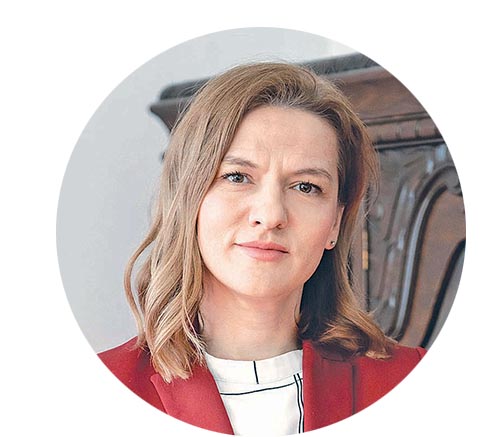
Nina Drakić
President, Chamber of Economy of Montenegro
When Nina Drakić became the youngest president of Montenegro’s Chamber of Economy, she inherited an institution steeped in formality. She chose to modernise it. Re-elected in September 2025, Drakić has reframed the Chamber as a proactive economic partner – pushing streamlined procedures, support for SMEs and start-ups, and deeper ties with EU business networks.
Her communication style is refreshingly direct. “Our job is not to wait for reform,” she says, “but to make it happen in the private sector first.” Drakić represents a generation of leaders proving that change in public institutions is possible – and profitable.
The Technocrat Who Speaks Brussels
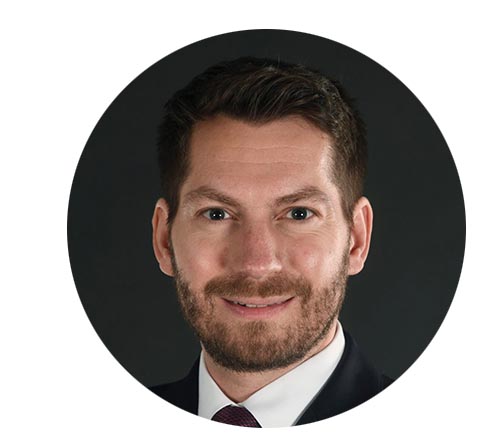
Mark Boris Andrijanič
Vice President, Kumo.AI | EIT Governing Board Member Former Minister for Digital Transformation of Slovenia
Few people from Adria have influenced European tech policy as directly as Mark Boris Andrijanič. As Slovenia’s first Minister for Digital Transformation, he helped steer the post-pandemic digital agenda and early EU debates on AI and cybersecurity. In 2025, he moved into frontier-tech operations as Vice President at Kumo.AI, while serving on the EIT Governing Board – bridging regulation, research, and industry.
His career shows leadership unbound by geography. From Ljubljana to Brussels and back into cutting-edge AI, Andrijanič argues that smaller nations can lead on digital ethics, trust, and security. In an era when technology defines sovereignty, he ensures Adria has a seat at the table.
Turning Integration into Delivery
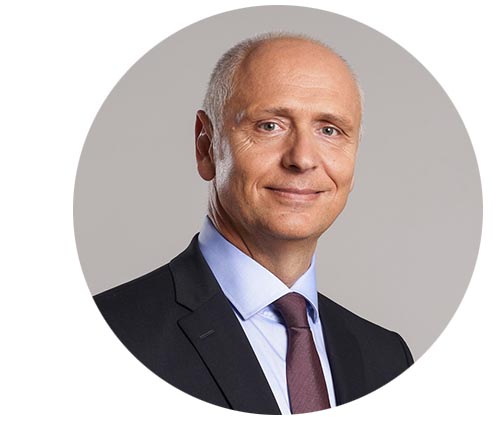
Amer Kapetanović
Secretary-General, Regional Cooperation Council Bosnia & Herzegovina
Every ambitious vision needs a realist to make it work. For the EU Growth Plan for the Western Balkans, that realist is Amer Kapetanović. The seasoned diplomat took over the RCC in 2025 with a mandate to translate rhetoric about connectivity and markets into measurable results.
From roaming-free mobile zones to customs simplification, rail and road green lanes, and steps toward the Common Regional Market, Kapetanović’s agenda is surgical: fix the frictions that cost businesses hours and economies millions. His tone is firm but optimistic — “integration isn’t a speech; it’s a spreadsheet.” He represents the region’s most valuable new habit: doing the work.